Earthwork phase vs. vertical phase: how to read machine mix
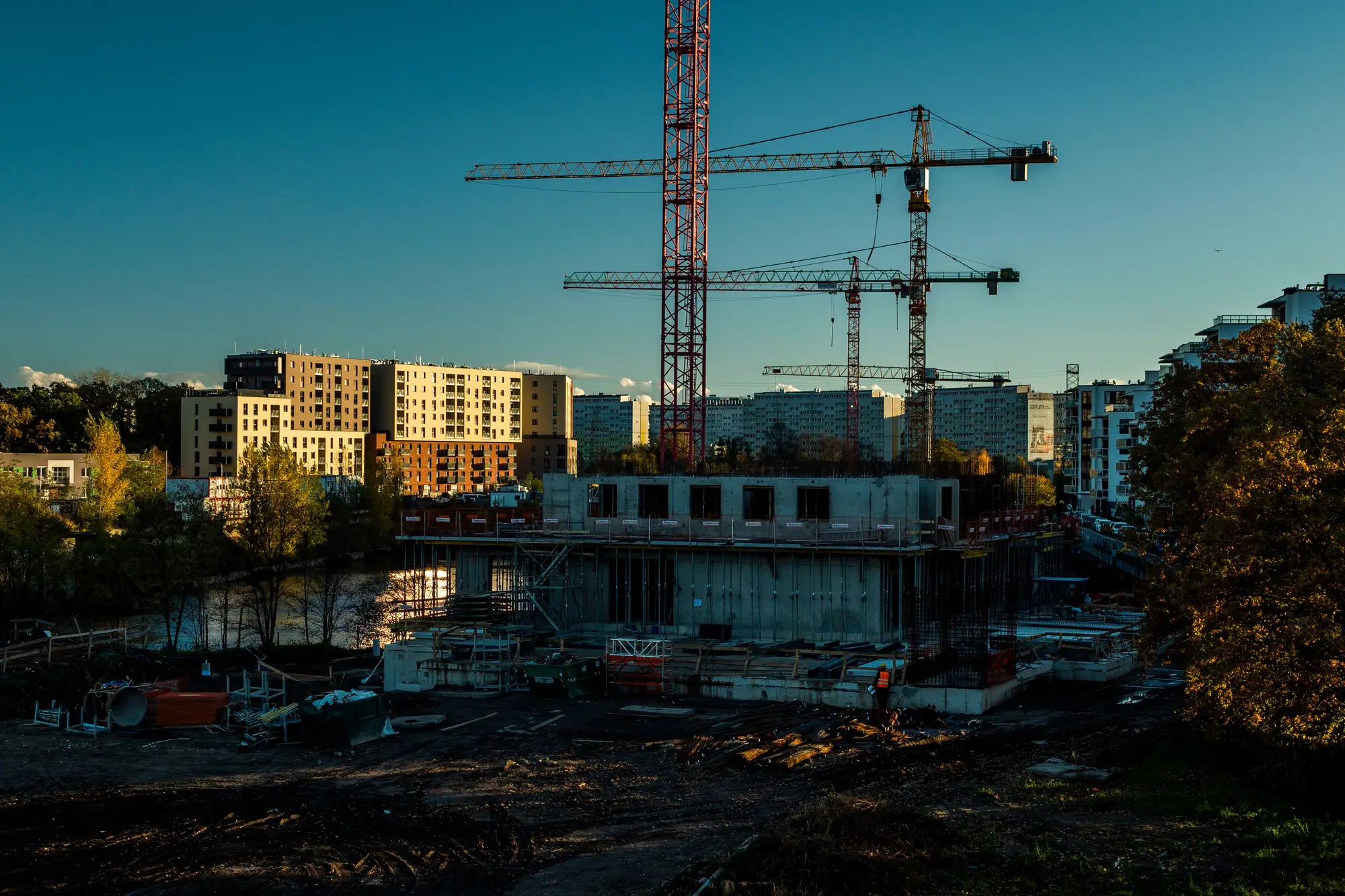
If you manage fleet across a territory, you need an answer on every site in your book: still moving dirt, or already gone vertical. Get it wrong and you either send a crane forty miles to a site that's still cutting pad, or leave a compactor sitting idle on a lot where the structural crew moved in three weeks ago. Reading the machine mix gives you that answer without a site visit.
Machine mix is just the combination of equipment classes parked and working on a site at a given time. Every phase of a build has a signature mix, and that signature changes predictably enough that you can read phase off it without ever driving out.
What earthwork-phase machine mix looks like
Early-phase sites run heavy on dirt equipment. Excavators, dozers, scrapers and motor graders doing cut-and-fill. Compactors (the sheepsfoot and smooth-drum rollers) working lift by lift behind them. Haul trucks and water trucks cycling in and out. Depending on the site, you'll also see trenchers or backhoes staging for utility rough-in once grading settles.
What you generally won't see much of yet: tower cranes, mobile cranes rated for structural picks, concrete pump trucks, or man lifts. A couple of those machines might show up early for a foundation pour, but they're not the dominant class on the ground. If a site's mix is mostly dirt iron with maybe one concrete truck parked near a footing, that's still an earthwork-phase site, even if the crew has started forming.
What vertical-phase machine mix looks like
The shift shows up fast once a site turns the corner. Dirt equipment thins out or leaves entirely. Cranes, whether a tower crane set in a fixed spot or mobile cranes rotating through for steel and panel picks, become the anchor machine. Concrete pump trucks show up on pour days. Boom lifts, scissor lifts and man lifts start appearing for envelope work, MEP rough-in, and later for finish trades. Forklifts and telehandlers move material around the pad.
A site that's gone vertical reads almost like the inverse of an earthwork site. The heavy dirt-moving classes drop off the mix, and the lift-and-place classes take over. That flip, month to month, is the clearest phase signal there is from above.
Where the mix gets harder to read
Real sites don't always flip clean. Podium and mixed-use builds keep earthmoving equipment on site well into structural work, because backfill, utility trenching and site grading around the perimeter are still happening while the tower crane is up and running on the main pad. A compactor parked at the edge of a site that's otherwise full of lifts doesn't mean the phase call was wrong. It usually means site work and vertical work are running in parallel, which is normal on anything bigger than a single pad.
One snapshot of machine mix rarely settles the phase call on its own. A single month can show a crane and an excavator on the same lot and leave you guessing which one is the story. Two or three consecutive monthly reads make the direction obvious: dirt classes trending down and lift classes trending up means the site is going vertical, even if both are present at any one point in time.
Reading machine mix across a territory
For a fleet manager covering dozens of sites, the real value isn't knowing the phase of one site. It's having a standing, site-by-site read of machine mix every month so you can plan repositioning before the phone rings, instead of reacting to it. Site Machine Mix does exactly that: a monthly read of the machine classes holding each site in your territory, pulled from high-resolution imagery, so you know which sites are still earthwork and which ones have already gone vertical.
If your team is still guessing phase from stale site logs or a drive-by every few weeks, it might be worth seeing what a monthly machine-mix read looks like for your own territory.