Smooth drum vs. padfoot roller: reading compactors from overhead
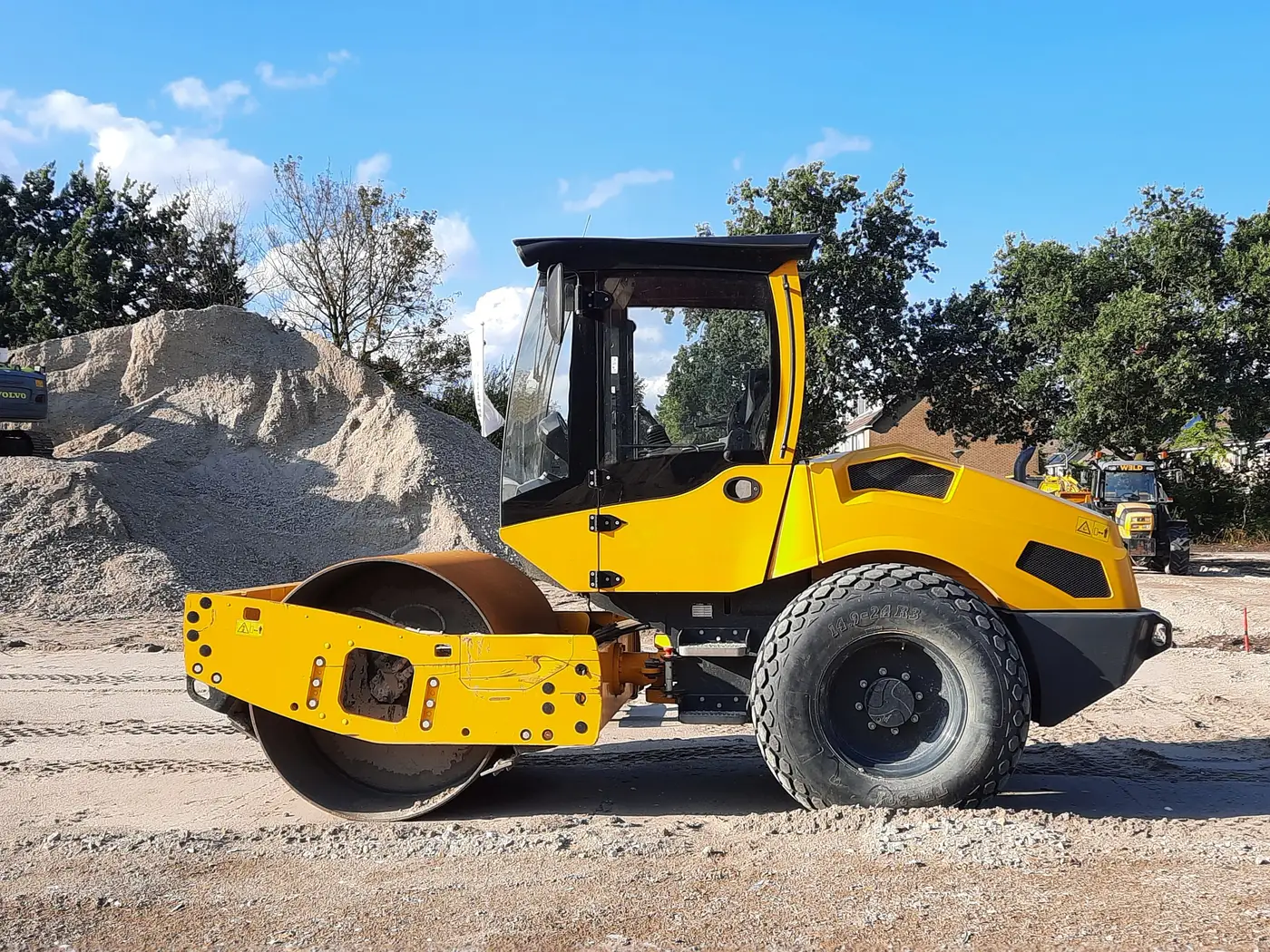
If you've ever pulled up an aerial shot of a jobsite trying to figure out whether that's a soil compactor or an asphalt roller down there, you already know the frustration. From 500 feet up, a roller is just a rectangle with a drum on it. No badge, no paint scheme you can read, no operator to wave you over and tell you what it is. But the shape of that rectangle, and what's around it, tells you more than you'd think.
Drum shape is the first tell
A smooth drum roller has exactly what the name says: a flat, uncorrugated steel cylinder. From overhead it reads as a clean, even band across the width of the machine, almost like a short section of pipe laid sideways. The surface looks uniform in every frame because there's nothing sticking out of it to cast texture.
A padfoot roller is the opposite. The drum is studded with raised feet (pads) that bite into soil to compact it from the inside out, not just press the surface. In imagery, especially anything under half a meter GSD, those pads show up as a stippled or dimpled texture across the drum, almost like a waffle pattern. On a clear day with decent sun angle, you'll even catch the shadow lines each row of pads throws, which is the fastest confirm you'll get without walking out there.
If the drum band looks smooth and glassy, you're probably looking at an asphalt or finish-grade roller. If it looks rough or stippled, that's a padfoot working lift compaction on soil or clay.
Context does half the work
Shape alone gets you most of the way, but where the machine is sitting closes the gap. A smooth drum parked on a paved surface, next to a paver or milling machine, on a road resurfacing job, is doing asphalt compaction. That's about as close to certain as overhead reading gets. A padfoot sitting on raw, exposed earth, often near an excavator cutting grade or a dozer pushing fill, is doing soil compaction on an embankment or subgrade lift. The machine type and the ground type should agree with each other. When they don't, that's usually a sign you're misreading one of the two, not that something unusual is happening.
Size matters too. Padfoot rollers tend to run smaller and more compact than the big single- or double-drum asphalt units you see on highway resurfacing. If the roller looks oversized relative to everything else on frame, lean toward asphalt finish work.
Other compactor types you'll run into
Smooth drum and padfoot cover most of what you'll see on an active site, but two more show up often enough to mention:
Vibratory plate compactors are small, often towed or hand-guided, and show up as little more than a dot near trench backfill or utility work. They're easy to miss in a monthly pass and easy to confuse with a stray piece of debris if the resolution isn't tight enough.
Pneumatic tire rollers use a row of rubber tires instead of a drum. From overhead they look lumpier than a smooth drum, with a visible gap-and-tire pattern across the width, but without the hard stippling of a padfoot. They're less common but turn up on asphalt jobs where a final rolling pass is needed after the steel drum.
None of this requires certainty down to the model number. For fleet repositioning and phase tracking, what you actually need to know is simpler: is this site still doing earthwork, or has it moved into paving? A padfoot on bare dirt says earthwork. A smooth drum next to a paver says paving. That's the read that matters for deciding where your iron needs to be next month.
Sorting that out by eyeballing scattered site photos or driving the territory doesn't scale past a handful of jobs. Site Machine Mix reads the machine mix across your active sites from monthly VHR imagery and hands you a per-site, per-month breakdown of what's parked where, by phase, so you know which jobs are still moving dirt and which ones are ready for finish equipment before you make a call on where to send the next roller.
If matching roller type to build phase across your whole territory sounds like something you'd rather not do by hand every month, see how Site Machine Mix reads it for you.