How many compactors does a paving crew need per lane mile?
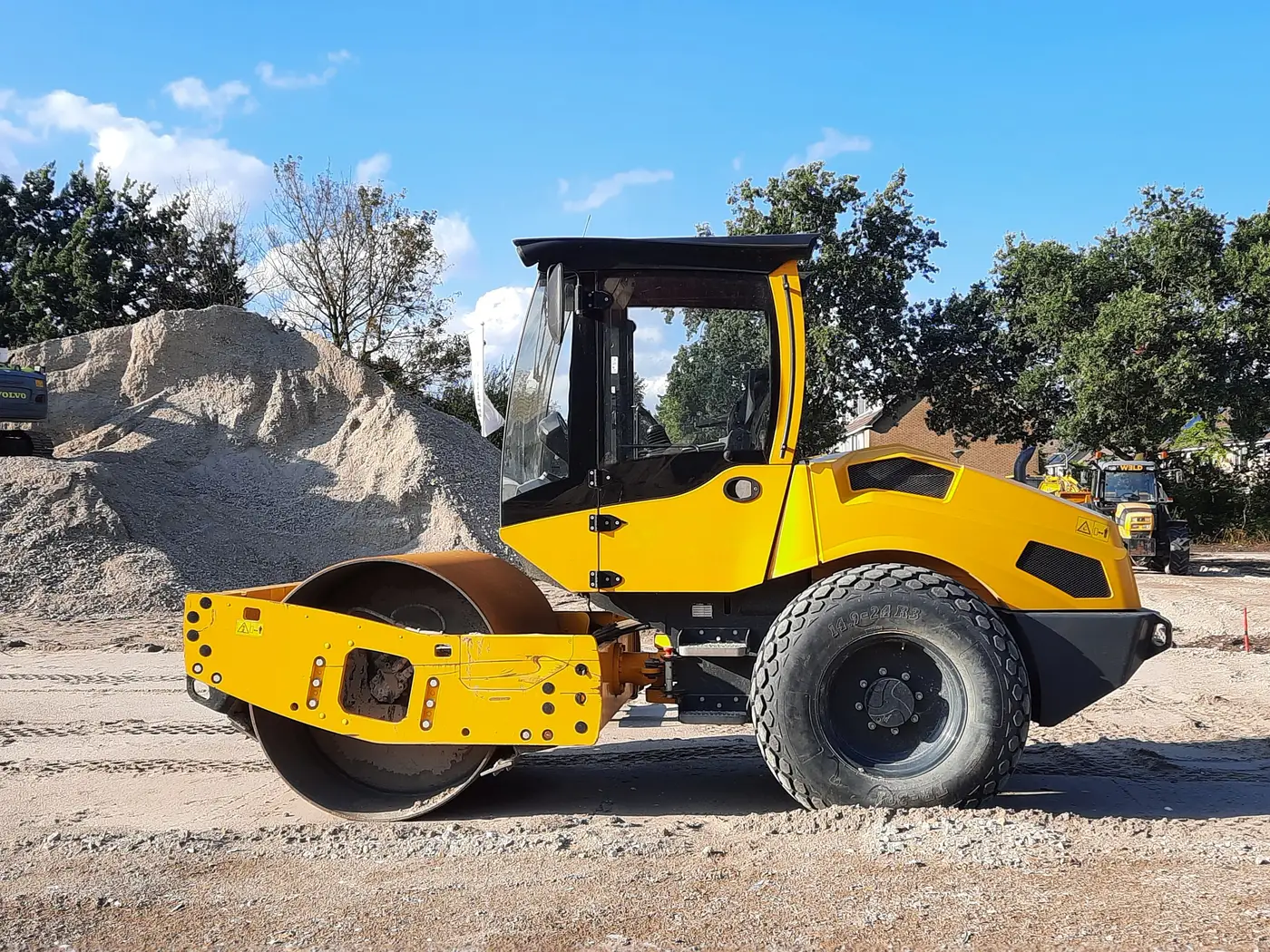
Most asphalt superintendents will give you the same answer before you finish the question: three rollers. But the real number depends on lay-down rate, mat width, and how much shoulder or joint work is riding alongside the mainline pass. Here's how crews size the compaction train, and where a fourth machine starts to pay for itself.
The standard three-roller train
A typical mainline paving crew runs three compactors behind the paver, each doing a different job on the mat before it cools past workable temperature:
- Breakdown roller - usually a double-drum vibratory, running close behind the screed while the mat is still hot enough to densify. This is the machine that does most of the heavy lifting on density numbers.
- Intermediate roller - often a pneumatic tire roller, kneading the mat and closing surface voids the steel drum can't reach on its own.
- Finish roller - a smaller double-drum, static or light vibratory, there to pull out roller marks and leave a clean riding surface.
Three machines is the baseline for a single paver running a normal mainline width, somewhere around 12 to 14 feet. That's the setup you'll see on most state DOT resurfacing jobs and most commercial lots.
What changes the count
Lane mile paving isn't a fixed unit of work. A crew laying 300 tons an hour needs a lot more compaction capacity than one laying 150, even if both are technically "one lane mile" jobs. A few things push the roller count up or down:
- Lay-down rate. Faster paving means a shorter window to hit density before the mat cools below the workable range. Crews running high tonnage often add a second breakdown roller rather than lean harder on one machine.
- Mat width. Widener attachments or echelon paving (two pavers running side by side) can put down 20+ feet of mat in one pass. That width usually can't be covered by a single breakdown roller fast enough, so a second one joins the train.
- Lift thickness. Thicker lifts need more passes to hit target density, which either slows the crew down or adds a machine to keep pace with the paver.
- Joint work. Longitudinal joints between passes sometimes get a dedicated small roller or a joint-matcher attachment instead of stealing time from the finish roller.
So the honest range for roller count per paving crew is three to five, with three being the floor for a standard mainline crew and four or five showing up on high-tonnage interstate work or wide-mat jobs.
Sizing the fleet, not just the crew
The roller count on paper is one thing. Having the right compactors sitting at the right yard when three crews all need a second breakdown roller the same week is a different problem, and it's the one that actually costs a fleet manager money. Rental houses and OEM fleet teams end up guessing which active sites still need a full compaction train and which ones have already moved past the paving phase and don't need a roller at all anymore, just a crew and a sweeper.
That's the gap a per-site read of what's parked on a job helps close. Instead of calling supers for a headcount or sending someone to drive the route, a tool that reads site activity and machine mix from imagery each month can flag which jobs are still in the compaction phase and which ones have moved on, so repositioning decisions aren't based on a two-week-old phone call. Site Machine Mix was built around exactly that question, reading what's on each active site month over month so fleet planning doesn't depend on guesswork.
If you're staring at a yard full of rollers and a route full of sites you haven't eyeballed lately, that monthly read is worth a look.